Book Title: Dalit Kitchens of Marathwada
Author: Shahu Patole
Translator: Bhushan Korgaonkar
Publisher: HarperCollins India
Number of Pages: 386
ISBN: 978-9356295834
Date Published: Jun. 2, 2024
Price: INR 388
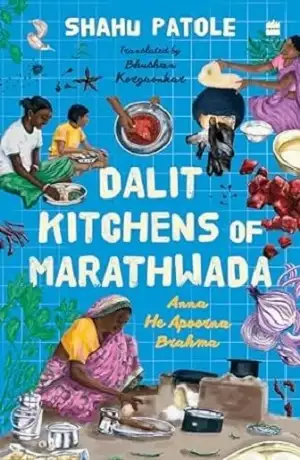
Book Review
Shahu Patole’s Marathi book titled – ” Anna He Apoorna Brahma ” now translated into English by Bhushan Korgaonkar as “Dalit Kitchens of Marathwada” transcends the realm of traditional cookbooks, offering a profound exploration of culinary heritage intertwined with social critique. Focused on the Mahar and Mang communities of Maharashtra’s Marathwada region, Patole, himself a Dalit, unveils the stark contrast between their resourceful cuisine and the opulent meals of upper castes. Beyond mere recipes, the book serves as a poignant memoir and a powerful indictment of the caste system’s influence on food practices.
The heart of “Dalit Kitchens of Marathwada” lies in its portrayal of what Patole aptly calls the “poor man’s patchwork plate.” Devoid of luxuries like oil, ghee, and milk, these dishes epitomize the communities’ ingenuity in turning humble ingredients into flavorsome meals. Patole skillfully weaves recipes into narratives that highlight food as a symbol of cultural resilience and identity, passed down through generations despite societal marginalization.
Central to Patole’s narration is the critique of how food has been weaponized to enforce caste distinctions. He challenges the Hindu scriptures’ categorization of food as “sattvic” or “tamasic,” questioning the notion that dietary habits define one’s purity or impurity. Through vivid descriptions of hunting practices and utilization of every part of an animal, Patole not only showcases survival strategies but also underscores the communities’ deep connection with nature and their environment.
Check out our Latest Book Reviews
While the book offers a wealth of sociological insights and historical context, its approach to recipes is unconventional. Patole deliberately eschews precise measurements, reflecting the everyday reality of cooking in these communities where resourcefulness and adaptability are paramount. This style may pose challenges for those accustomed to structured recipe formats but serves a deeper purpose: to convey the improvisational nature of cooking amidst scarcity and to provoke reflection on societal norms surrounding food.
“Dalit Kitchens of Marathwada” is a timely and essential read, particularly for those interested in anthropology and culinary history. It challenges mainstream narratives that dismiss or stigmatize marginalized communities’ food traditions, offering a nuanced perspective that celebrates resilience and diversity. Patole’s work is not just about food; it’s a call to dismantle caste-based stereotypes and recognize the richness of cultural heritage born from adversity.
Books are love!
Get a copy now!