Book Title: Speaking with Nature: The Origins of Indian Environmentalism
Author: Ramachandra Guha
Publisher: Fourth Estate India
Number of Pages: 440
ISBN: 978-9362134905
Date Published: Oct. 10, 2024
Price: INR 593
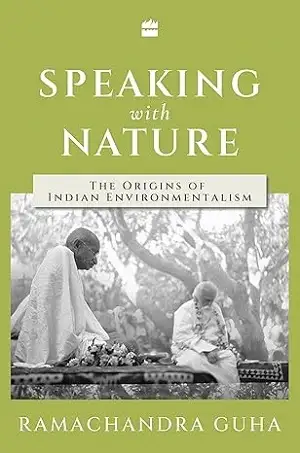
Book Review
In “Speaking with Nature: The Origins of Indian Environmentalism“, renowned historian Ramachandra Guha challenges the idea that environmentalism is only for the wealthy. Guha explores the deep-rooted environmental consciousness in India, proving that concern for nature is not just a luxury of affluent nations. Through vivid profiles of ten influential thinkers, the book uncovers a lesser-known history of environmental movements in India, far removed from the typical narratives centred around Europe and America. These figures, including Rabindranath Tagore and J.C. Kumarappa, show how environmentalism in India is intertwined with social justice and economic survival.
Author Guha’s approach brings a fresh perspective to the global environmental conversation. The book introduces the concept of ‘livelihood environmentalism,’ contrasting it with the ‘full-stomach environmentalism’ seen in wealthier nations. The individuals Guha profiles come from diverse intellectual backgrounds, contributing unique perspectives on topics ranging from wildlife conservation to the impact of industrialization. Together, their work challenges conventional Western ideas of nature preservation by highlighting the inseparable link between ecological concerns and the well-being of marginalized communities in India.
One of the book’s strengths is how Guha brings history to life through the lives of his subjects. Tagore, known primarily for his poetry, is portrayed as an environmental visionary who integrated nature into education. Kumarappa’s focus on decentralization and sustainability resonates with India’s modern vision of self-reliance, while figures like Verrier Elwin emphasize the vital connection between indigenous rights and environmental protection. Each chapter offers valuable lessons for how these pioneers influenced global conversations on environmental sustainability.
Check out our Latest Book Reviews
Though Guha celebrates the foresight of these early environmentalists, he also urges readers not to romanticize their ideas. He emphasizes the need to adapt their principles to modern complexities, particularly in addressing today’s global environmental crises. By showcasing India’s rich tradition of integrating ecological stewardship with social justice, Guha presents an alternative model to Western development approaches that prioritize growth over sustainability.
Overall, “Speaking with Nature” is a thoughtful, deeply researched book that offers fresh insights into India’s environmental heritage. While its academic rigor may appeal more to scholars and activists, the book’s accessible language makes it an engaging read for anyone interested in environmentalism, sustainability, or India’s intellectual traditions. Guha’s work is a timely reminder that the path to global sustainability must include voices from all corners of the world, particularly those who have long championed the balance between nature and human dignity.
Books are love!
Get a copy now!