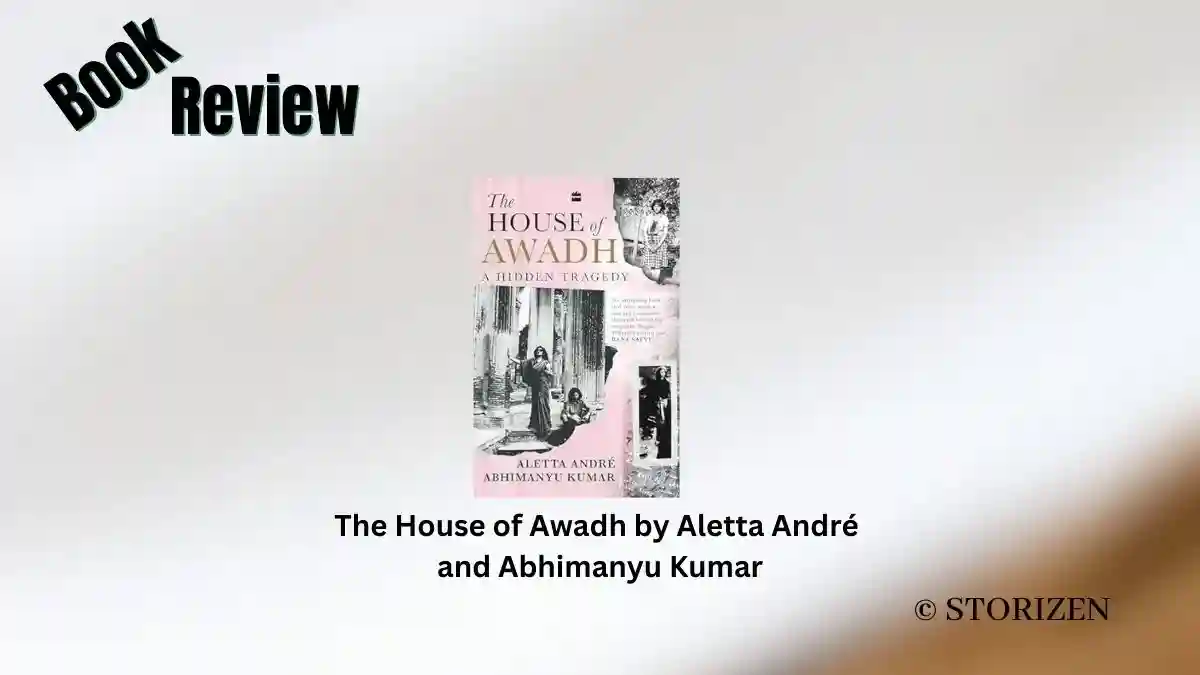
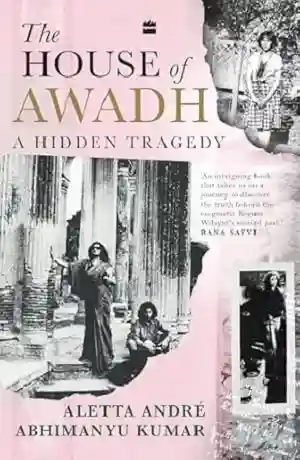
Book Title: The House of Awadh: A Hidden Tragedy
Author(s): Aletta André and Abhimanyu Kumar
Publisher: HarperCollins India
Number of Pages: 352
ISBN: 978-9365693690
Date Published: Feb. 26, 2025
Price: INR 388
Book Review
Aletta André and Abhimanyu Kumar’s “The House of Awadh: A Hidden Tragedy” is a meticulously researched exploration of one of India’s most enigmatic families—Begum Wilayat Mahal and her children, Princess Sakina and Prince Ali Raza, self-proclaimed descendants of the House of Awadh. The book traces their journey from their dramatic arrival at New Delhi Railway Station in 1975, where they squatted for a decade, to their secluded life in the decaying Malcha Mahal, a former hunting lodge nestled in Delhi’s Ridge Forest. Through this narrative, the authors weave together the personal saga of the family with the broader historical backdrops of colonial injustices, Partition’s upheaval, and the ongoing struggles of identity in modern India.
What sets “The House of Awadh” apart is its commitment to journalistic rigor and narrative balance. André and Kumar draw upon cross-border reportage, archival material, and intimate interviews, piecing together a story that oscillates between heritage and uncertainty. The book does not simply accept or dismiss the family’s royal claims; instead, it interrogates them, presenting the reader with the ambiguity that has always surrounded the family—were they rightful heirs to a lost kingdom, misunderstood figures, or cunning impostors? This approach allows the authors to transcend sensationalism, offering a nuanced account that is as much about the construction of historical truth as it is about the family’s fate.
Thematically, the book is a meditation on displacement, legacy, and the search for identity. The family’s struggle for recognition and their self-imposed exile in Malcha Mahal serve as a microcosm for the trauma of Partition and the complexities of postcolonial South Asia. Historian Narayani Basu, commenting on the book, notes that the story of Begum Wilayat Mahal is “not just about one woman’s claim to royalty—it’s about the legacy of Awadh, the trauma of Partition, and the way we construct historical truth.” The authors’ ability to blend personal narratives with historical context results in a work that is both melancholy and fascinating, offering insight into India’s lost royalty and the lingering shadows of colonialism.
Check out our Latest Book Reviews
Structurally, the book employs a reverse chronology, beginning with the family’s final days in Malcha Mahal and working backward through time. This narrative choice enhances the sense of mystery, gradually revealing the layers of myth and reality that enshroud the family. The research process itself was arduous, with the authors conducting fieldwork across Lucknow, Kashmir, and Pakistan, and sifting through sparse property records and newspaper archives. The result is a compelling blend of history and memory, providing readers with an unputdownable account that challenges easy answers and invites reflection on the nature of belonging and historical memory in contemporary India.
Books are love!
Get a copy now!