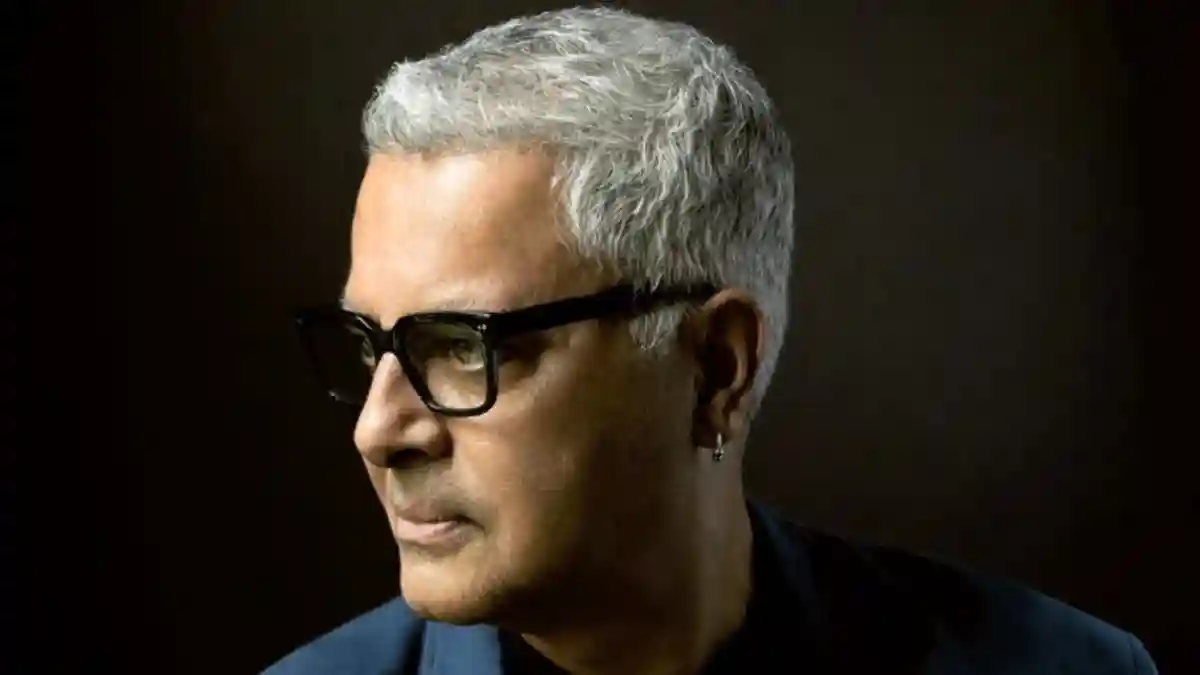
In this illuminating conversation with Amitava Kumar, we delve into the creative genius behind The Green Book, a work that transcends traditional storytelling by seamlessly blending art and literature. Kumar shares the philosophy of “seeing is, in fact, being,” the evolution of his creative journey across the trilogy of colors, and the intricate balance of spontaneity and purpose in his observations. From vivid sketches that complement profound narratives to reflections on how art and literature serve as life’s compass, this interview unravels the threads of creativity, introspection, and the enduring legacy of an observer’s gaze.

1. In The Green Book, your illustrations play a central role in the storytelling process. What inspired you to intertwine art with writing so seamlessly, and how do you decide which moments are better expressed through sketches rather than words?
I didn’t think of the drawings or paintings as illustrations. An illustration, as I understand the word, is an accompaniment. It is something drawn or painted to illustrate what is more important—the argument or the story, which is the main thing. I draw or paint what I find visually interesting. There is no hierarchy that separates the visual from the verbal. I think of them as autonomous forms, independent of each other. And yet they are related, one can say something about the other, not in a plain sense but through the mechanics of juxtaposition.
2. The book emphasizes the philosophy of “seeing is, in fact, being.” How has this approach shaped not just your art but also your personal worldview?
Yes, to see is to observe the world—and your self inhabiting this world. The idea of observation was central to my development as a writer. I’d enter a room (I’m talking now of the time I was in my late teens) and take note of everything arrayed around me. Noticing! The look on the faces of people. The hurt, the excitement, disappointment. At a different level, the idea of being sensitive to what appears unsaid.
Also Read: Book Review: The Green Book by Amitava Kumar
3. With The Green Book following The Blue Book and The Yellow Book, how has your creative journey evolved across these works? Is there a thematic connection among these colours that readers should note?
I learned more about painting. I began with simple water colours and by the time we come to the final volume of the trilogy I’m presenting you more complicated art, including works in oil. The theme connecting them is that of being faithful to the idea of keeping a diary, to mark my passage through the world and the times we have lived in. Each volume has an emphasis on a particular color, most markedly in The Green Book where I try to focus on nature and other aspects of the color green.

4. The book has been described as a “quiet guide” that offers comfort and hope. What role do you believe art and literature play in helping people navigate a constantly changing world?
Art and literature are mechanisms that provide maps of our lived realities. You are navigating what you call a constantly changing world: it is as if you are walking through a maze that is life but in your hand is a thread that has been unspooling all along. You never let go of the thread because it tell you where you came from and where you are now. This threat is art and literature.
5. Your work often balances spontaneity with a sense of purpose. Can you share an instance where a spontaneous observation during your travels turned into a pivotal part of the book?
Your question is making me think. Most of the observations are spontaneous observations. That is the nature of observations.
I’m still thinking. For instance, I was in the London Underground and saw a man kill himself. It was something I forced myself to observe. I describe this scene in The Yellow Book. There wasn’t any time to think, really. In that sense, the response I had was purely spontaneous. But it underlined what is central to my work. The ethic of observation, of paying scrupulous attention, as the ethos of my being.
6. Combining writing, painting, and sketching into one cohesive narrative is no small feat. What challenges have you faced in this multidimensional storytelling process, and how have you overcome them?
I’m a novelist. I have also written nonfiction books. The idea of structuring a narrative, of managing or arranging voices, is a part of my job. It is the same work here. Thinking through questions of structure is a familiar task for me and it is the work I’ve long been training myself to do. At the same time, let’s not forget what William Maxwell said: “After forty years, what I came to care about most was not style, but the breath of life.” I try to remember that, to let a sense of what is alive to overcome anything that is dictated by anything by a sense of structure or style.
Also Read: Book Excerpt: The Green Book by Amitava Kumar
7. As an observer of life and the world, what message or legacy do you hope The Green Book leaves for its readers?
The book’s subtitle is “An Observer’s Notebook.” That is a pointer about the message I’m trying to convey. Seeing is being.