Jaipur, February 1st, 2025: The 18th edition of the Jaipur Literature Festival, presented by Vedanta, in association with Maurti Suzuki, and powered by Vida, has enjoyed an inspiring three days, featuring a caravan of the world’s most celebrated thinkers, speakers, and writers discussing a diverse range of topics. Each evening, acclaimed artists deliver remarkable performances at the Jaipur Music Stage, while the concurrently held Jaipur BookMark, India’s premier publishing conclave, continues to be a hub for the convergence of leading voices in the publishing industry.
On 31st January, the Festival came to an end with the fantastic Kal Penn, who mesmerised the audience with tales from his multifaceted life as a Hollywood actor, White House aide, and Indian American navigating the challenges of stereotypical roles. He shared humorous anecdotes, such as competing with a white actor in brownface for Van Wilder auditions and reflected on how he learned to speak out against dehumanisation. “There was a fear that if we cast a diverse show, white people won’t watch it, but diverse audiences will always watch white content. I think what you’ve seen in this equalisation of content is that humans will watch compelling stories, period,” he said. His session challenged the audience to think beyond stereotypes, embrace kindness, and uplift others.
The third morning of the Festival opened with a soulful Dagarvani Dhrupad recital by Niloy Ahsan, accompanied by Ustad Immamuddin Khan. Rooted in the fifteenth-century mystic Swami Haridas, Ahsan’s performance embodied Prana, with Dhrupad as a spiritual journey toward self-awareness.
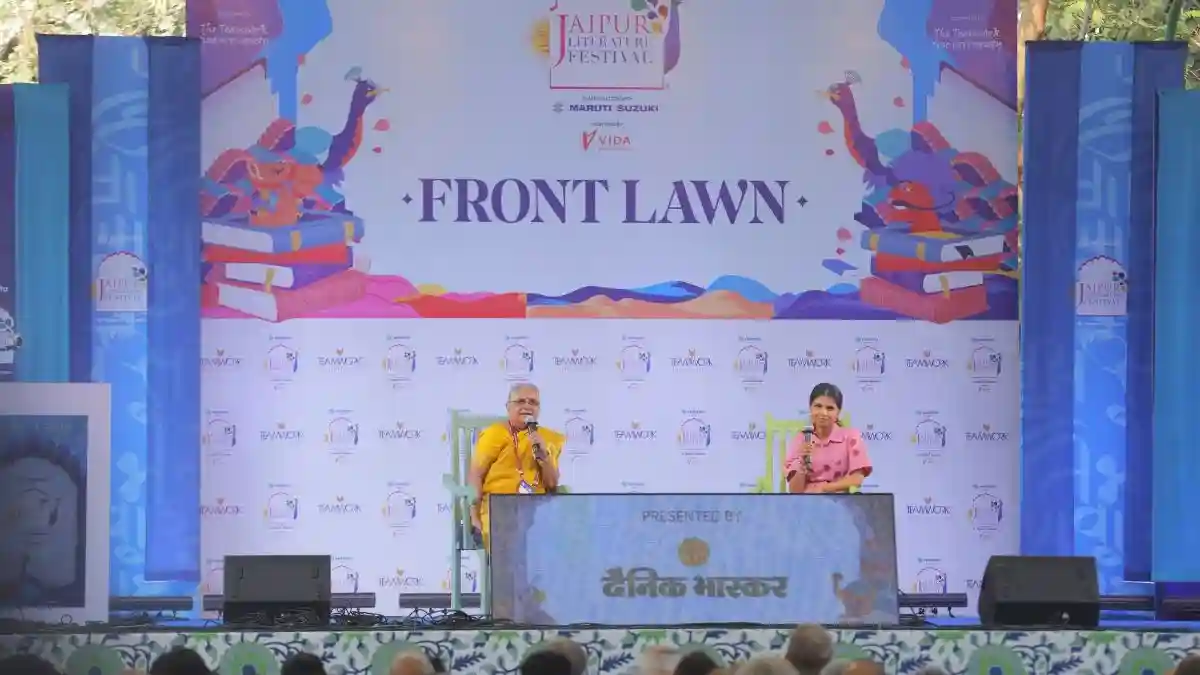
The Morning Music segment was followed by a session with acclaimed and beloved writer Sudha Murty speaking with her daughter, businesswoman and wife of former British PM, Rishi Sunak, Akshata Murty. Akshata described the Jaipur Literature Festival as the “queen of literature festivals,” or, as “Amma would call it, the Kashi of literature festivals.” The mother-daughter duo spoke about their shared love for books, childhood memories of storytelling, and the impact of reading on learning and personal growth. Akshata reflected on the values of service and duty that her parents instilled in her from an early age, shaping her worldview and approach to life. Sudha, in turn, spoke about how these ideals are deeply embedded in her books.

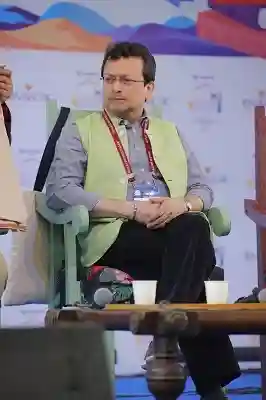
The consciousness of mortality is unique to human beings and so is the ability to possess a billion dollars. Nobel Laureate Venky Ramakrishnan successfully carried out the task to infuse humour into a conversation about death in a highly attended session. With due respect towards the increasing lust to live longer, Ramakrishnan highlighted the need to respect the principles of evolution in which death is a necessity. “All sorts of entities die, for example, cities can die, companies can die. So, what do we mean by death when we talk about us, humans? It’s a strange paradox that when we are alive, millions of cells in us are dying all the time and in fact a lot of that death is actually to acquire. But at the same time, at the moment of what we think of as death, most of our cells are still alive, in fact all our organs are alive, and you can donate them for organ transplants. So, what we mean by death is the loss of our ability to function as a whole individual. So, it really depends upon how you define the individual as a coherent being.” Ramakrishnan also cautioned that populations who live longer also have lower fertility rates, which again isn’t the recipe for a vibrant and model society.
Poet and social reformer Kanhaiya Lal Sethia Ji worked for marginalized people, worked for Dalits, and participated in the freedom struggle. I am very happy to be associated with Sethia Ji. This award is not just an award, it is a mission, and I am glad to be part of this mission.
– Badri Narayan
In the vein of the fear of dying and the desire for longevity, at The Holberg Prize Event: The Swerve Revisited: How the World Became Modern, Stephen Greenblatt was in conversation with William Dalrymple, introduced by Jørgen Sejersted. Greenblatt reflected on the impermanence of literature, highlighting how countless works, including Roman literature, were lost as empires fell, emphasizing the fragile relationship between power, preservation, and the written word. Greenblatt highlighted how science and poetry are often seen as separate realms today, but in ancient texts, they intertwined seamlessly, emphasizing the need for humanities and science to walk hand in hand to rethink and reshape the modern world. In his Pulitzer Prize-winning book The Swerve, Holberg Prize Laureate Stephen Greenblatt argues that the Renaissance rediscovery of Lucretius’ De Rerum Natura transformed the world by emphasizing the inevitability of death, urging people to focus on life rather than be consumed by the fear of dying.
Six war correspondents, analysts, photographers and authors from around the world joined the panel ‘Frontline’, which drew a range of Festival goers. The numerous global conflicts and changing political climate of the 21st century have raised questions about seemingly unending wars. The panel discussed the stories that have changed them. For Lindsey Hilsum, Ghaith Abdul-Ahad and Yaroslav Trofimov, it was watching a crisis take shape in real time around them while in Rwanda, Iraq and Ukraine. Christopher de Bellaigue highlighted the work of journalists in Gaza and Afghanistan, and the destruction of culture amid war. Vishnu Som shared his experiences from Kargil, recounting the harrowing moments while covering the conflict. With artillery shells exploding around Som and his camera person and even a TV tower being destroyed, he and his team had pressed on, in order to get more vivid pictures. Edward Wong drew parallels between his father’s involvement in the Chinese Liberation Army and American soldiers in Afghanistan. Many on the panel have had to grapple with war and turmoil coming to their own doorsteps creating a balancing act of personal ethics and being a journalist.
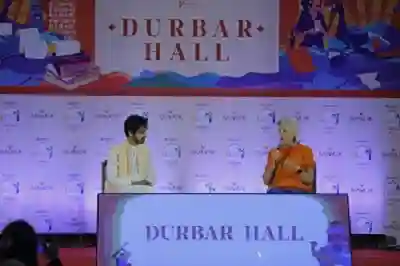
In the session with ‘Stone Yard Devotional’, Charlotte Wood, whose book of the same name was in the 2024 Booker shortlist, was in conversation with Anish Gawande. The book is about the inward journey of a woman who retreats from her life and world in Sydney and moves to a catholic convent. The author unpacks the impulses behind a contemporary woman’s decision to become a nun and traces it to a universal dissatisfaction with the lack of climate accountability. Written during the pandemic, bushfires in Australia and her cancer diagnosis, Wood states that she writes for people who have been chastened by the world. She makes her despairing protagonist confront stillness and silence as it’s the most difficult thing to do in our times.
The prestigious Kanhaiya Lal Sethia Award for this year was presented to renowned Hindi poet Badri Narayan. Badri Narayan is known for his deep sociological perspective, and thought-provoking writing. Along with his poetry, he is also active in academic and public life. His acclaimed poetry collection “Tumdi Ke Shabd” earned him the Sahitya Akademi Award in 2022.

Kanhaiya Lal Sethia, a great poet, freedom fighter, and social reformer from Rajasthan, is remembered for his works that were rich in national consciousness, social change, and the sensitivity of the folk language. Established in 2016, the purpose of this award is to honour authors who have made outstanding contributions to the field of poetry.
On this occasion, poet and academic Badri Narayan, the winner of the 2025 Kanhaiya Lal Sethia award, expressed his feelings in the following words:
“Poet and social reformer Kanhaiya Lal Sethia Ji worked for marginalized people, worked for Dalits, and participated in the freedom struggle. I am very happy to be associated with Sethia Ji. This award is not just an award, it is a mission, and I am glad to be part of this mission.”
Sanjay K. Roy, Managing Director, Teamwork Arts, Festival Co-director and award-winning author Namita Gokhale, and poet-critic Ranjit Hoskote praised Badri Narayan’s creative journey and his literary contributions. The occasion was graced by the special presence of Jayprakash Sethia from the Kanhaiya Lal Sethia Trust.
Day 4 of the Festival will be back tomorrow at expansive premises of Clarks Amer Hotel with another tranche of transformational dialogues, uplifting ideas, and change-inspiring books. Some of the speakers for tomorrow include Amol Palekar, Shashi Tharoor, John Vaillant, Matt Preston, Amitabh Kant, Huma Qureishi, David Hare, and Andrew O’Hagen.
About Jaipur Literature Festival
Described as the ‘greatest literary show on Earth’, the Jaipur Literature Festival is a sumptuous feast of ideas. The past 17 years have seen it transform into a global literary phenomenon, having hosted nearly 2000 speakers and welcoming over a million book lovers from across India and the globe. As the years pass and the Festival grows, our core values remain unchanged: to serve as a democratic platform offering access to all. Every year, the Festival brings together a diverse mix of the world’s greatest writers, thinkers, humanitarians, politicians, business leaders, sports people, and entertainers on one stage to champion the freedom to express and engage in thoughtful debate and dialogue. Writers and Festival Directors Namita Gokhale and William Dalrymple, alongside Festival Producer Teamwork Arts, invite speakers to take part in the five-day programme set in the historic and dynamic state capital Jaipur. Past speakers have ranged from Nobel Laureates J.M. Coetzee, Orhan Pamuk, and Muhammad Yunus, Man Booker Prize winners Ben Okri, Margaret Atwood, and Paul Beatty, Sahitya Akademi winners Girish Karnad, Gulzar, Javed Akhtar, M.T. Vasudevan Nair as well as the late Mahasweta Devi and U.R. Ananthamurthy along with literary superstars including Amish Tripathi, Chimamanda Ngozi Adichie, and Vikram Seth. An annual event that goes beyond literature, the Festival has also hosted Amartya Sen, Amitabh Bachchan, the late A.P.J. Abdul Kalam, His Holiness the 14th Dalai Lama, Oprah Winfrey, Stephen Fry, Thomas Piketty and former president of Afghanistan, Hamid Karzai.
Website: www.jaipurliteraturefestival.org
About Teamwork Arts
Teamwork Arts is a highly versatile production company with roots in the performing arts, social action and the corporate world. For over 30 years, Teamwork Arts has taken India to the world and brought the world to India, presenting the finest of Indian performers, writers , change makers and visual artistes in the knowledge and arts space in India and abroad. Every year, we produce over 33 festivals in 72 cities and 26 countries in the fields of performing & visual arts and literature. We produce the world’s largest literary gathering: the annual Jaipur Literature Festival; JLF international now travels to the US, UK, and Europe. Even amidst the upheaval and unsettling times of 2020 and through 2021, Teamwork Arts successfully launched the digital series, JLF Brave New World and Words Are Bridges, which were viewed by over 4.8 million people in their first season. Through its digital avatar, the Jaipur Literature Festival reached over 27 million viewers in January 2021. Art Matters empowers artistes across India to collaborate by commissioning them to create new works. The digital series Be Inspired was launched in 2021 – a series that crystal gazes into the future with conversations on science, technology, innovation, environment, and more. Three on-ground editions of ‘Be Inspired – Fast-Tracking the Future’ have been in India already. In 2024, Teamwork Arts collaborated with the Royal Family of Jaipur to produce the first edition of the Jaigarh Heritage Festival, presented by Vedanta.